I. The Truth of Low-Altitude Security: It Is Not Merely “Detecting Rogue Drones”, but Effectively Neutralizing Them
After 2026, low-altitude threats go far beyond casual tourists taking aerial photos:
- Modified FPV drones intruding into airport clearance zones, forcing commercial flights to divert;
- Cinewhoop drones circling chemical plants to film manufacturing processes and steal data;
- Unwelcome aerial drones appearing directly above grandstand areas at concerts;
- Modified border-patrol drones conducting close range reconnaissance, even with GPS disabled.
Traditional counter-measures are proving inadequate:
- Jamming guns: limited range of several hundred meters; ineffective against pre programmed autonomous flight routes;
- GNSS spoofing: significant compliance and regulatory risks;
- Detection-only solutions: “seeing but being unable to stop” equals zero protection.
A true benchmark solution integrates detection, identification, high-speed pursuit, precise locking, physical neutralization, and full-process forensics.
II. Why the Industry Is Embracing Null-Space Hayabusa LKHB
Foshan Null Space did not pivot from consumer drone filming to security work. It develops countermeasure grade high speed guided interceptor drones from the ground up.
The Hayabusa LKHB series establishes three layers of defensive perimeter:
| Model | Positioning | Core Capabilities | Typical Application Scenarios |
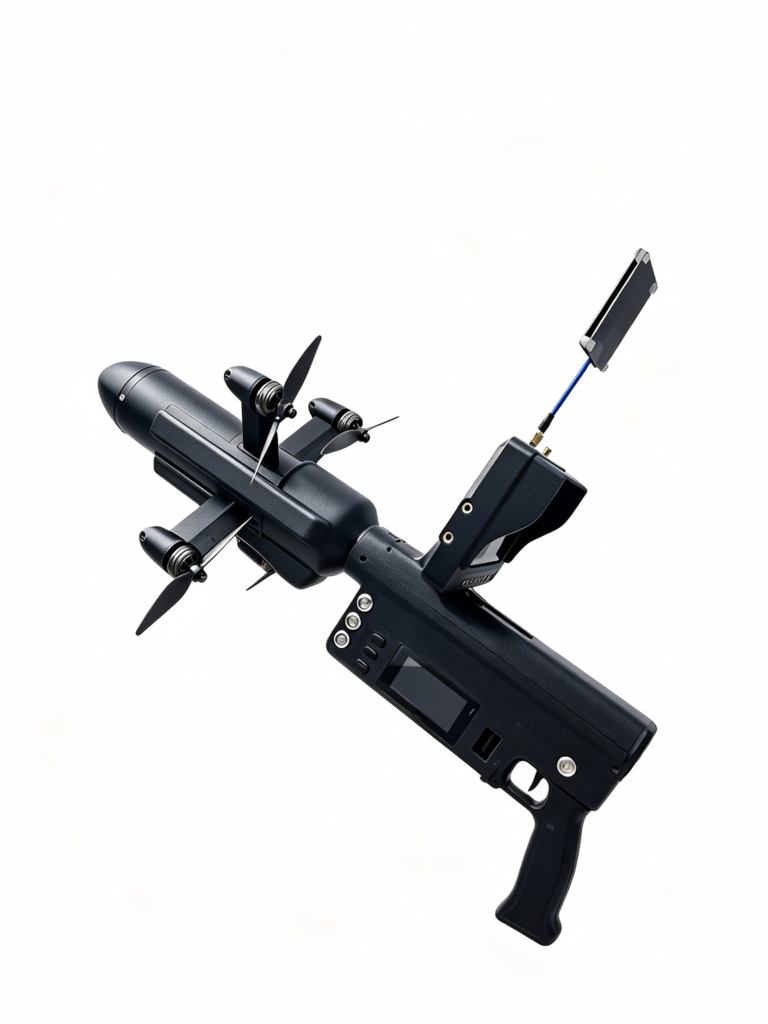
| LKHB-1.5 | Individual Rapid Response Unit | 1.2 kg weight, hand launched ejection, top speed 350 km/h, 1.5 km combat radius | Sports events, factory compounds, ad hoc security missions |
| LKHB-5 | On Site Permanent Compound Defence | Top speed 380 km/h, 5 km interception radius, 8 minute operational endurance, dual sensor guidance | Substations, chemical parks, storage facilities |
| LKHB-30 | Wide Area Deep Layer Defence | Top speed 400 km/h, 30 km class coverage, 5 000 m service ceiling, long range flight | Airports, border zones, critical energy infrastructure |
Additional 7-inch standard and 10 inch hybrid-wing variants reach a maximum speed of 460 km/h, specifically engineered to counter high-performance modified FPV drones.
III. Benchmark Scenario 1: Civil-Aviation Airport Clearance Zones
Airports face two major risks from rogue drones:
- Jamming equipment interfering with aircraft navigation signals;
- Rogue drones loitering along final-approach flight paths.
Null-Space Workflow:
- Detection via radar and optoelectronic sensors → assessment on command platform → LKHB-30 interceptor deploys.
- Dual-sensor AI guidance (640-pixel thermal imager + 1200TVL visible-light camera): reliable target locking in pre-dawn conditions, rain fog haze, and against backlighting.
- Pure kinetic-energy impact; no explosives or shrapnel, posing no hazard to terminal buildings or runways.
- Low-latency RTSP video streaming; full interception footage recorded for civil-aviation security traceability.
As one airport client put it: “We do not want to merely scare rogue drones away. We need to stop them from flying ever again.”
IV. Benchmark Scenario 2: Chemical / Power / Energy-Storage Industrial Parks
Operators in these sectors face two key hazards: industrial espionage and fire risks.
- Unauthorised drones photographing tank farms, pipeline galleries and facility vulnerabilities.
- Jamming guns risk disrupting instrumentation; net-capture drones lack sufficient speed.
This is where the LKHB 5 delivers decisive value:
- 24-hour standby posture; automatic identification of intruder drones within 5 km.
- AI discriminates among birds, kites and drones; false alarm rate ≤ 5 %.
- 8-minute operational flight time, supporting 2 3 successive interception attempts per sortie.
- Repairable after impact, delivering cost savings compared to single use net capture munitions.
V. Benchmark Scenario 3: Major Sports Events, Concerts and Official Government Functions
Event security demands ultra fast response capability:
- No unauthorised drones permitted over grandstands, stages or VIP zones.
- Sometimes as little as 30 minutes available for full deployment.
- Intruder drone pilots are often untrained amateurs.
LKHB 1.5 Individual Variant:
- Transportable in carry-case, hand-ejection launch; operational within 5 minutes.
- Accelerates 0-100 km/h in 1.3 seconds; intercepts intruders almost the moment they appear.
- Human operator only issues the “engage intercept” command; AI handles target tracking, impact execution and evidence recording autonomously.
VI. Comparative Advantages vs. Competing Solutions
| Solution | Target Detection | Effective vs Autonomous Flight | Urban Environment Suitability | Physical Neutralization Capability | Forensic Evidence Collection |
| Jamming Gun | Yes | No | High compliance risk | No | Poor |
| GNSS Spoofing | Yes | Partial | High operational risk | No | Poor |
| Net Capture Drone | Yes | Yes | Yes | Yes (capture intact drone) | Moderate |
| Hayabusa LKHB Kinetic Interceptor | Yes | Yes | Yes (no ordnance detonation) | Yes (hard-kill interception) | Excellent |
Null-Space interceptors are not multi purpose filming drones: they are purpose built hardware for neutralizing hostile intruder drones.
VII. Proven Deployed Use-Cases
- Permanent anti drone protection for civil aviation airport clearances
- Low altitude threat mitigation for power plants, substations and oil gas installations
- Temporary airspace lockdown for large capacity sports stadiums and concerts
- Hybrid wing long endurance patrol along national borders
- Anti surveillance protection for industrial compounds and prisons
- Integrated networked interception systems combining radar, optoelectronics and command and control platforms
VIII. Frequently-Asked Customer Questions
Q1: Does the system work against GPS-denied FPV drones?
A1: Yes. Hayabusa relies on dual sensor AI to physically identify the intruder airframe; it does not depend on signal emissions from the target drone.
Q2: Could crashed drone debris injure people on the ground?
A2: Interception flight paths are pre computed within the command software. Engagements are planned to take place outside populated zones and at safe altitudes.
Q3: Can it integrate with existing security command platforms?
A3: Yes. Standardised interfaces support connection to radar, optoelectronic sensors and dispatch systems, functioning as a dedicated hard-kill execution unit.
Q4: Do operators need official drone-pilot certification for the man-portable unit?
A4: Event-use rapid-response operators complete specialised training; airport and base grade deployments require certified pilots plus ground-crew personnel.
Q5: What is the price range for a complete system?
A5: Pricing varies significantly for individual-soldier, compound-scale and airport-wide configurations. Quotations are customised based on required defensive radius and quantity of interceptors.
Q6: Is the interceptor destroyed after each impact?
A6: Kinetic-impact-optimised modular construction allows straightforward component replacement and reuse; it is not a disposable single-shot weapon.