Cleaning drone
Photovoltaic panels, curtain wall cleaning industry status and trouble spots
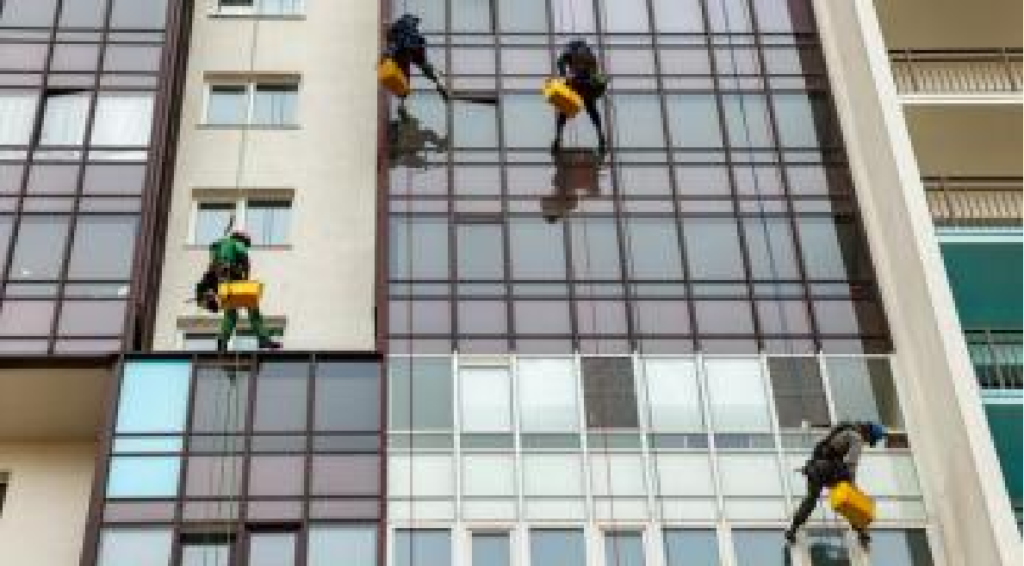
Up to now, artificial cleaning ( spiderman, cradles ) is still the main cleaning method, the industry’s cleaning company exists in small, many, miscellaneous characteristics of the industry, the industry is chaotic good and bad mixed between each other there is a “wall cleaning qualification” shared and “spiderman” shared the situation. The industry is facing many challenges.
Cleaning drone parameter
Model: LK-15C
Water Flow Rate: 13.9L/min
Hose Length: 80m/100m
Flight Time: 45min (Curtain Wall Cleaning), 55min (Photovoltaic Cleaning), 30min (Fan Cleaning)
Distance between Nozzle and Cleaning Object: 2-3m (Adjust distance according to working environment)
Battery: 14S 41000mAh
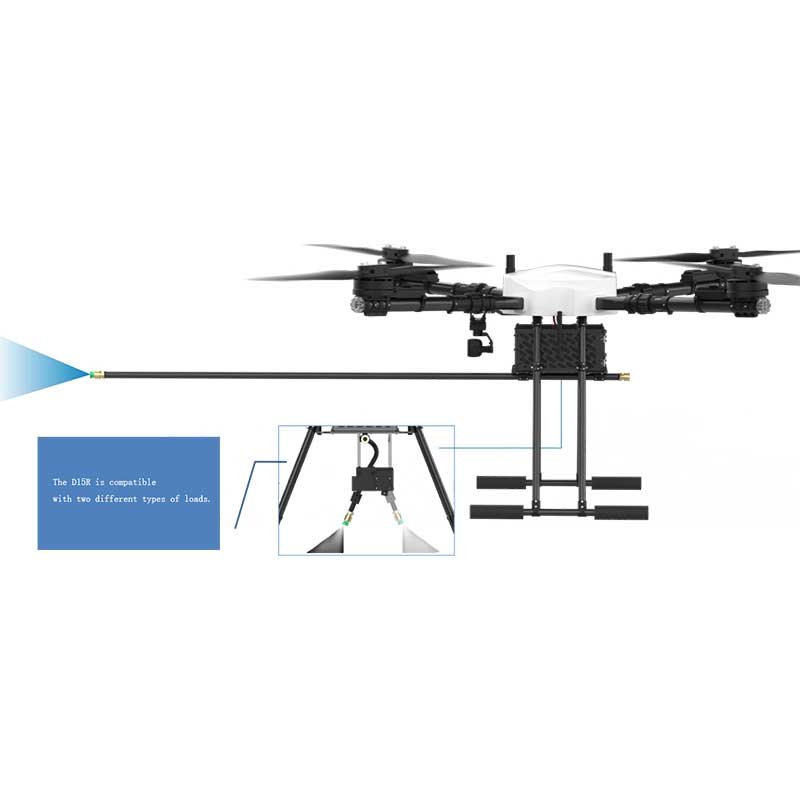
Nozzle Length: 1500mm
Flight Speed: 0-10m/s
Operating Temperature: -10°C to 40°C
Operating Humidity: 0-90%
Wind Resistance: Level 7
Rated Water Pressure: 10MPa
Maximum Water Pressure: 20MPa (Instantaneous)
Shallow Cleaning: 1000m²/H
Deep Cleaning: 500m²/H
Charging Time: 40 minutes
Current Status and Pain Points of the Photovoltaic Panel and Curtain Wall Cleaning Industry
Currently, manual cleaning (using spider-like manpower and suspended platforms) remains the primary cleaning method. The cleaning industry is characterized by its small size, large number, and diverse operations, resulting in a chaotic and uneven business model.
There are instances of shared “exterior wall cleaning qualifications” and “spider-like manpower” services, posing numerous challenges.

Operational risks
Traditional manual high-altitude cleaning operations require workers to use scaffolding or suspended platforms, which poses extremely high safety risks, especially in severe weather conditions.

Low cleaning efficiency
Manual cleaning is slow and cannot complete large-area exterior wall cleaning tasks in a short time, affecting overall work efficiency; manual cleaning also involves high-risk operations for cleaners and has historically been insufficient in its cleaning efforts.

Poor operational flexibility
Fixed-track equipment and some automated equipment can only cover specific areas and are difficult to adapt to various complex building exterior structures, resulting in poor flexibility.

High cost
High-altitude cleaning requires a large amount of manpower and time, resulting in high costs; the purchase and maintenance costs of automated cleaning equipment are high, and the equipment installation and operation are complex, resulting in high overall costs.
Features of Cleaning Drones

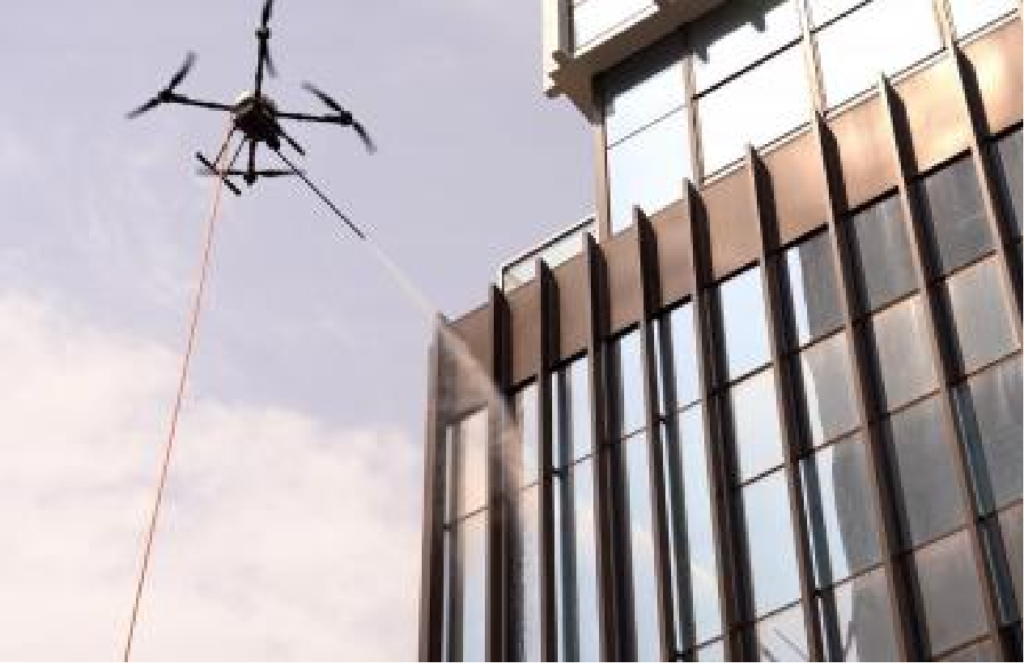
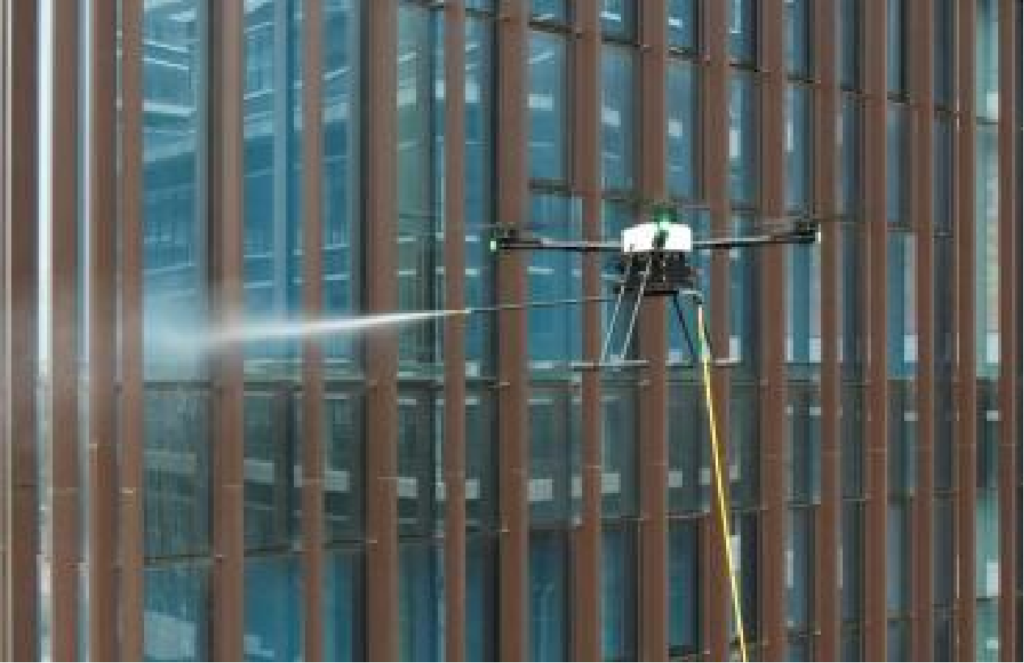
Tethered water supply operation
Long uninterrupted operation without any limitation of water tank capacity.

Rapid installation and deployment
Folding design for easytransportation and storage; quick release mode for 1-minute deployment.

1000m²/h max. 20MPa Quick Wash
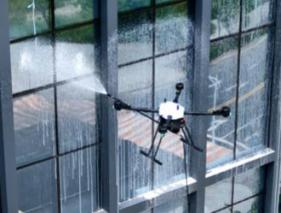
Fast washing under hovering,1h coverage 1000m².

20MPa maximum pressure
Fast and effective removal of stubborn stains
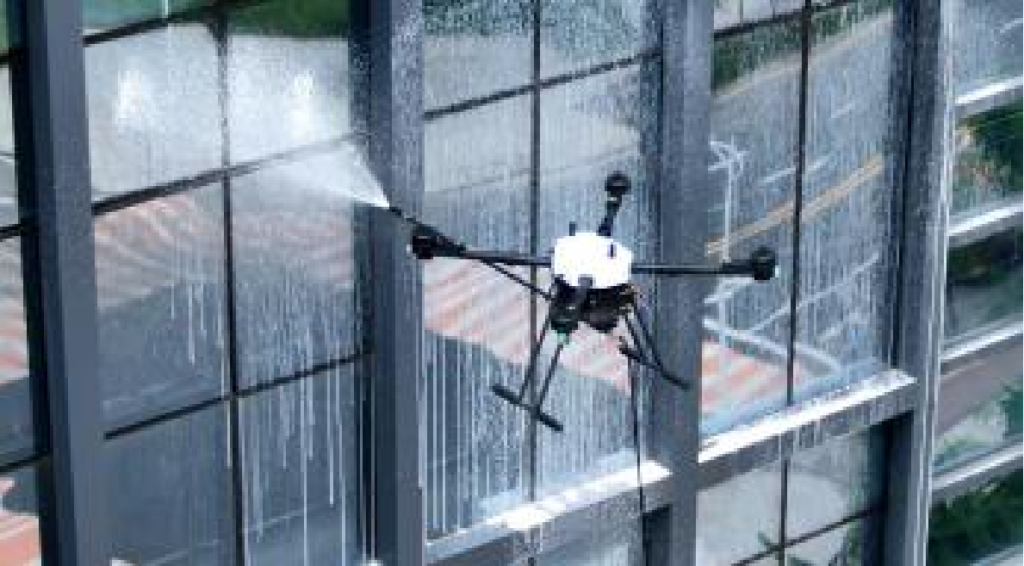
Advantages of Cleaning Drone
- Replacing manual overhead:workRemote control of personnel can complete all kinds of complex cleaning tasks at high altitude, eliminating the potential risks of working at height.
- Dual RTK configuration:integrated RTK centimeter-level high-precision positioning module, with accurate positioning capability, provides real-time centimeter-leve,positioning data, significantlyimproving the absolute accuracy ofthe data.
- Intelligent Obstacle:Avoidance Sensing SystemWith radar obstacle avoidance front vision sensor, real-time perception of the surrounding obstacle information,so that the flight is more at ease.
Comparison of drone aerial operations and traditional manual spider operations
The solution based on the Jiusi UAV high-altitude cleaning system has significant advantages in safety, efficiency, and cost compared to traditional manual methods.
| quota | Jiusi LK-15C UAV Aerial Cleaning System | Traditional manual labor methods |
|---|---|---|
| Security | Drone operation replaces manual high-altitude work, greatly reducing risks. | Manual labor poses safety hazards such as falls from heights. |
| Cleaning efficiency | 17m²/min, high-pressure rapid cleaning, supports uninterrupted operation. | Slow cleaning speed and long operation time |
| cost | One-time equipment investment, low long-term operating costs | High labor costs, requiring a large investment of manpower and time each time. |
| Cleaning effect | 20MPa high-pressure cleaning, combined with professional cleaning agents, thoroughly removes stubborn stains and mold. | Difficult to clean thoroughly, affecting the building's aesthetics and material lifespan. |
| Deployment time | Quick installation, deployment completed in 1 minute | Erecting scaffolding or suspended platforms is time-consuming and labor-intensive. |
| Operational flexibility | Two mounting options and four nozzles provide multi-angle and multi-scenario coverage. | Poor flexibility, difficult to cover all work areas |
Case Study - Exterior Wall Maintenance of a Building in Dongguan
A high-end building in Dongguan, 60 meters tall with 18 floors, suffered from mold and grime on its exterior walls due to frequent rainy weather in Guangdong, affecting its appearance. The complex structure of the high-rise made traditional manual cleaning inefficient and posed significant safety hazards. To maintain its upscale image and ensure tenant satisfaction, the management decided to seek an efficient and safe exterior cleaning solution.
Challenges and pain points

Working at heights is dangerous
Traditional manual high-altitude cleaning requires workers to operate in suspension, which poses high safety risks.

Cleaning complex structures is difficult
The building's facade is complex, making it difficult to clean thoroughly using traditional methods.

High labor costs
A team of 10+ people will clean for one day, with each person earning 300-500 yuan per day.

Weather factors
Rainy weather leads to frequent mold and dirt buildup, making cleaning time-consuming and difficult to deploy quickly.
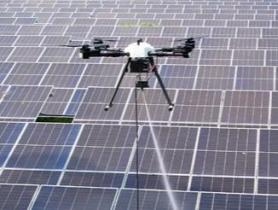
- Drone-based high-altitude cleaning: Eliminates the safety risks associated with working at heights, eliminating the need for personnel to climb.
- Cost savings: Significantly reduces labor costs and equipment maintenance expenses, resulting in substantial long-term savings.
- Safe and stable operation: The nozzle maintains a distance of 2-3 meters from the object being cleaned, with real-time distance measurement ensuring safety and stability.
- Increased cleaning efficiency: A high-efficiency cleaning capacity of 1000 square meters per hour significantly reduces the cleaning time for large exterior walls, improving work efficiency.
- Fast and effective cleaning: High-pressure cleaning, supports various cleaning liquids, and provides immediate cleaning results.
Application